
Wage Statement Law in California
A Guide to California Labor Code Section 226
(Republished: August 2026)
Accurate wage statements are more than an administrative requirement. They are an important part of California’s wage-and-hour protections, giving employees the information they need to understand how their pay was calculated and helping employers maintain transparent, compliant payroll practices.
California Labor Code Section 226 establishes specific requirements for the itemized wage statements employers generally must provide to employees. Understanding these requirements can help employees identify potential payroll errors and help employers reduce the risk of costly compliance violations.
Understanding Labor Code Section 226
California Labor Code Section 226 generally requires employers to furnish employees with an accurate, itemized wage statement, either as a detachable part of a paycheck or separately when wages are paid.
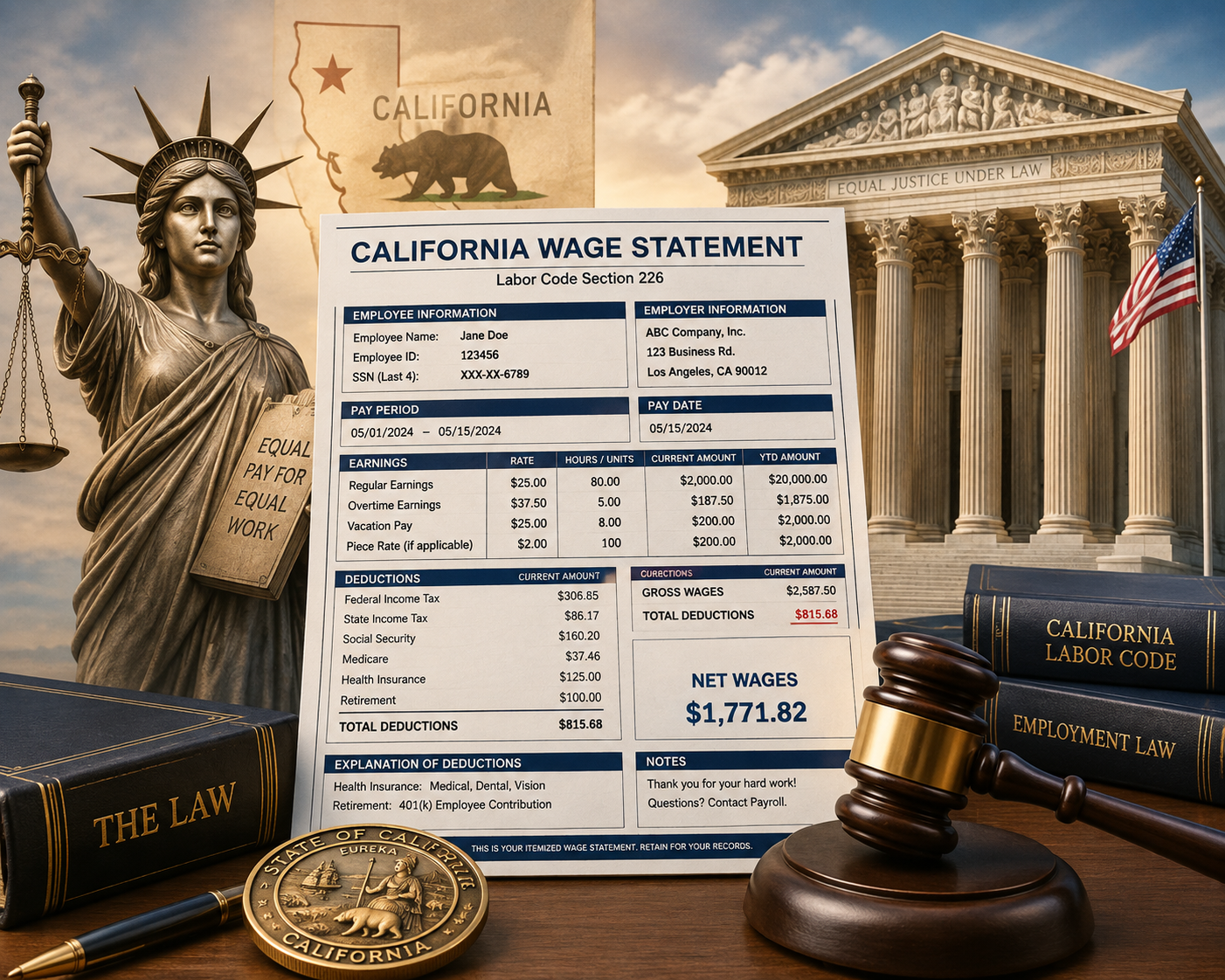
The statute requires wage statements to contain specific information so employees can determine how their compensation was calculated. Depending on the circumstances, required information includes:
Gross wages earned
Total hours worked, except where a statutory exception applies
The number of piece-rate units earned and the applicable piece rate, when applicable
All deductions
Net wages earned
The inclusive dates of the pay period
The employee's name and either the last four digits of the employee's Social Security number or an employee identification number other than a Social Security number
The legal name and address of the employer
All applicable hourly rates in effect during the pay period and the corresponding number of hours worked at each rate
These requirements allow employees to review their compensation and identify potential discrepancies involving hours, wage rates, deductions, overtime, or other payroll calculations.
The California Department of Industrial Relations and its Division of Labor Standards Enforcement provide additional information regarding California wage-and-hour requirements.
Failure to provide accurate, compliant wage statements can expose an employer to statutory damages, civil penalties, costs, attorney's fees, and other remedies when the applicable legal requirements are satisfied.
Required Wage Statement Information
A California wage statement should provide employees with a clear and understandable accounting of their compensation for the applicable pay period.
Under Section 226(a), the required information generally includes:
Gross wages earned
Total hours worked, unless an exception applies
Piece-rate information, when the employee is paid on a piece-rate basis
All deductions
Net wages earned
The inclusive dates of the pay period
Required employee identification information
The employer's legal name and address
Each applicable hourly rate and the corresponding number of hours worked at that rate
Employees should review their wage statements regularly rather than assuming that every payroll calculation is correct. Missing hours, incorrect rates, unexplained deductions, or incomplete employer information may indicate a payroll error or potential violation.
Careful review can also help employees identify possible wage theft before a payroll problem continues over multiple pay periods.
Penalties, Damages, and Employee Remedies
California law provides several potential remedies for wage statement violations, but the remedy available depends on the nature of the violation and the legal provision being enforced.
Under Labor Code Section 226(e), an employee who suffers injury as a result of an employer's knowing and intentional failure to comply with the wage statement requirements may be entitled to statutory damages. The statute generally provides for $50 for the initial pay period in which a violation occurs and $100 for each subsequent pay period, up to an aggregate maximum of $4,000, together with costs and reasonable attorney's fees.
Section 226 also permits injunctive relief in appropriate circumstances.
Separate civil penalties may apply under Labor Code Section 226.3 for certain failures involving required wage statements or required records. Because statutory damages, civil penalties, and other remedies have different requirements, they should not be treated as interchangeable.
Employees who believe their wage statements violate California law may be able to pursue a claim through the California Labor Commissioner's Office or through a civil action, depending on the circumstances.
California law also contains protections against unlawful retaliation. An employee who raises concerns about unpaid wages or potentially unlawful payroll practices may have additional rights if an employer retaliates because of legally protected activity.
Employer Obligations and Best Practices
Compliance with Labor Code Section 226 involves more than simply producing a pay stub. Employers should maintain payroll systems and procedures designed to ensure that wage statements remain accurate and complete from one pay period to the next.
Effective compliance practices may include:
Maintaining required payroll and wage statement records for the applicable statutory period
Conducting periodic payroll audits
Verifying employee classifications and applicable wage rates
Reviewing overtime and other premium-pay calculations
Training payroll and human resources personnel on California wage-and-hour requirements
Investigating and correcting identified payroll discrepancies promptly
Confirming that payroll software accurately displays all information required by California law
Maintaining reliable records supporting the amounts shown on employee wage statements
Strong payroll procedures can reduce legal risk while giving employees greater confidence that their compensation has been calculated correctly.
Employers should also recognize that wage statement compliance may intersect with other California employment requirements involving minimum wages, overtime, meal and rest period premiums, piece-rate compensation, commissions, and other forms of compensation.
Common Wage Statement Compliance Problems
Even relatively small payroll errors can become significant when they are repeated across numerous employees or multiple pay periods.
Common wage statement issues may include:
Missing required information
Incorrect hours worked
Incorrect hourly or overtime rates
Inaccurate gross or net wage calculations
Improper or unexplained deductions
Incorrect pay-period dates
Missing or inaccurate employer information
Failure to identify all applicable hourly rates and corresponding hours
Incomplete piece-rate information when applicable
Failure to provide employees with compliant wage statements when wages are paid
Employers can reduce these risks through regular payroll reviews and by correcting systemic errors as soon as they are discovered.
Employees, meanwhile, should compare their wage statements with their own records of hours worked, wage rates, overtime, commissions, bonuses, and other compensation. A discrepancy that appears minor on a single pay stub may become substantial if it occurs repeatedly.
Protecting Your Rights When a Wage Statement Appears Incorrect
An inaccurate wage statement can make it difficult to determine whether an employee has received all wages owed. Missing hours, incorrect wage rates, unexplained deductions, or incomplete payroll information may warrant closer examination.
Employees who identify a potential problem should consider preserving copies of their wage statements, time records, employment agreements, payroll communications, and other documents relating to their compensation. These records can be important when determining whether a payroll discrepancy is an isolated mistake or part of a larger wage-and-hour issue.
California Labor Law provides educational resources addressing California employment rights, including additional employment law guides covering wage-and-hour issues and related workplace protections.
Employees with questions about a potentially inaccurate or incomplete wage statement can also seek advice regarding their particular circumstances.
Frequently Asked Questions
What information must appear on a California wage statement?
Labor Code Section 226(a) generally requires an itemized wage statement containing information such as gross wages, total hours worked unless an exception applies, deductions, net wages, pay-period dates, required employee and employer identification information, and applicable hourly rates with the corresponding hours worked at each rate. Additional information is required for employees paid on a piece-rate basis.
Can an employee recover damages for an inaccurate wage statement?
Potentially. Under Labor Code Section 226(e), an employee who suffers injury as a result of an employer's knowing and intentional failure to comply with Section 226(a) may be entitled to statutory damages. The statute generally provides $50 for the initial pay period in which a violation occurs and $100 for each subsequent pay period, subject to an aggregate maximum of $4,000, plus costs and reasonable attorney's fees.
Other penalties or remedies may apply depending on the circumstances.
What should an employee do if a wage statement appears incorrect?
Employees should preserve the wage statement and compare it with their records of hours worked, wage rates, deductions, and payments received. Depending on the circumstances, an employee may also contact the California Labor Commissioner's Office or consult an employment attorney regarding available remedies.
How can employers reduce the risk of Section 226 violations?
Employers should maintain accurate payroll records, regularly audit wage statements, verify wage rates and hours, train payroll personnel, promptly investigate discrepancies, and ensure that their payroll systems consistently include all information required by California law.
How long must employers maintain wage statement records?
Labor Code Section 226 requires employers to maintain copies of wage statements, or records of the deductions shown on those statements, for at least three years. Employers should also consider other California recordkeeping requirements that may apply to payroll and employment records.
By: Heath A. Havey
Heath has been advising companies in California, Nevada, Japan, and U.S. employment laws since 1998.
Havey Law Offices LLC provides experienced legal guidance on California employment law and workplace compliance. Contact us today to discuss your company’s legal obligations, address potential compliance concerns, and develop practical strategies to reduce risk and maintain compliance with California employment laws.
Legal Disclaimer
The information provided on this blog is for general informational purposes only and does not constitute legal advice. Reading this blog, commenting on posts, or contacting the author through this website does not create an attorney–client relationship.
While we strive to ensure the accuracy and timeliness of the content, laws and regulations change frequently, and the information may not reflect the most current legal developments. You should consult a qualified attorney licensed in your jurisdiction before making any legal decisions or taking any action based on the information provided here.
The author and this blog disclaim all liability for any actions taken or not taken based on the content of this site. Use of this blog is at your own risk.